
Role
Product Designer
Team
Sean Anthony, UX Research
Yuktha Veeranki, Product Design
Marisa Arancibia, Product Manager
Skills
Visual Design
Interaction Design
Prototyping
Timeline
3 months (Currently in development)
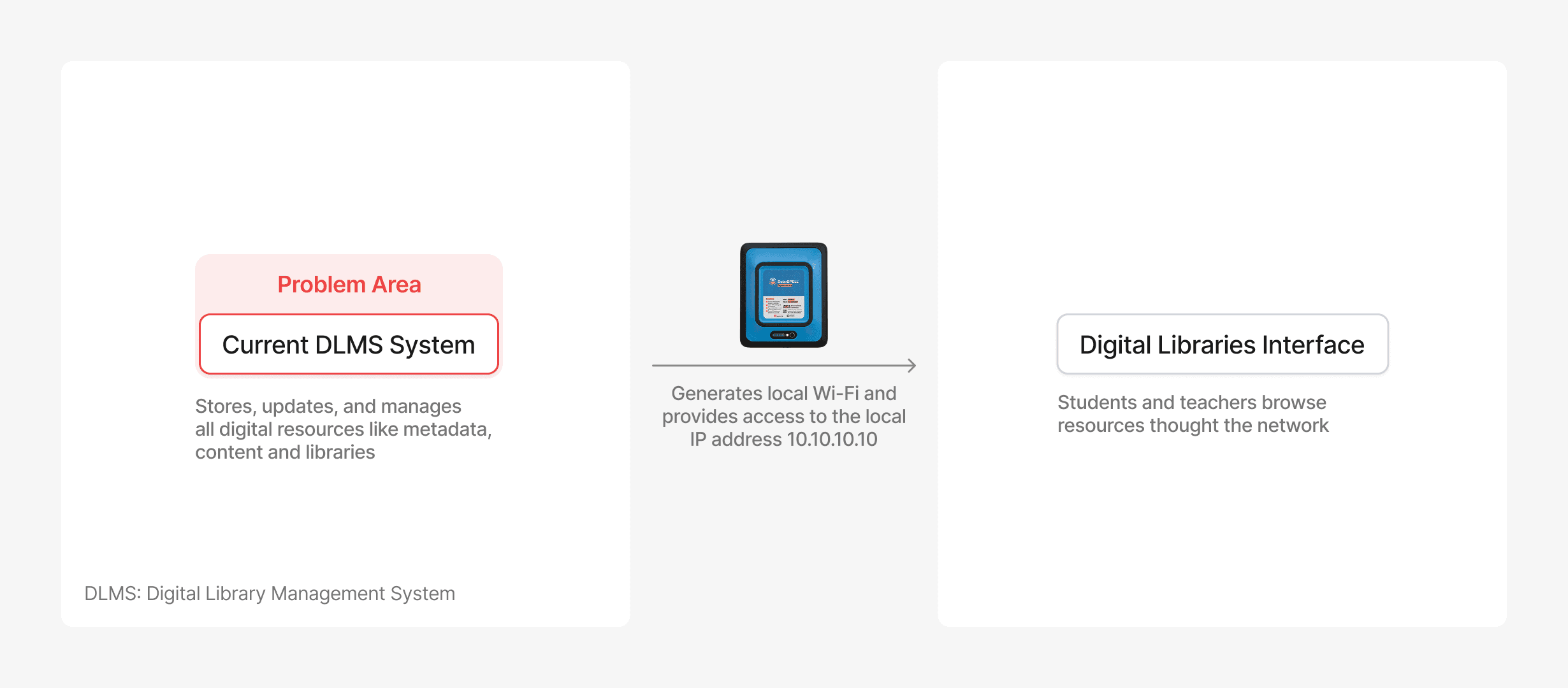
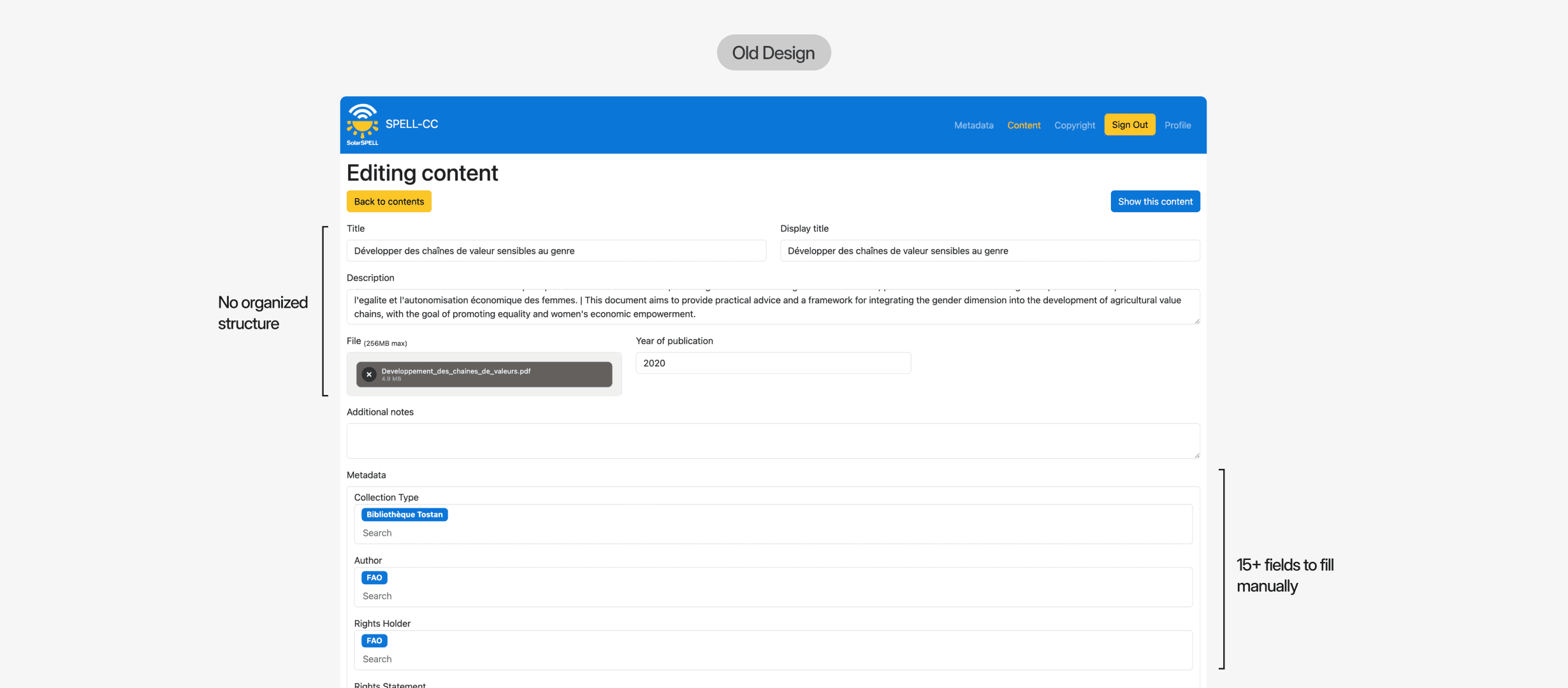
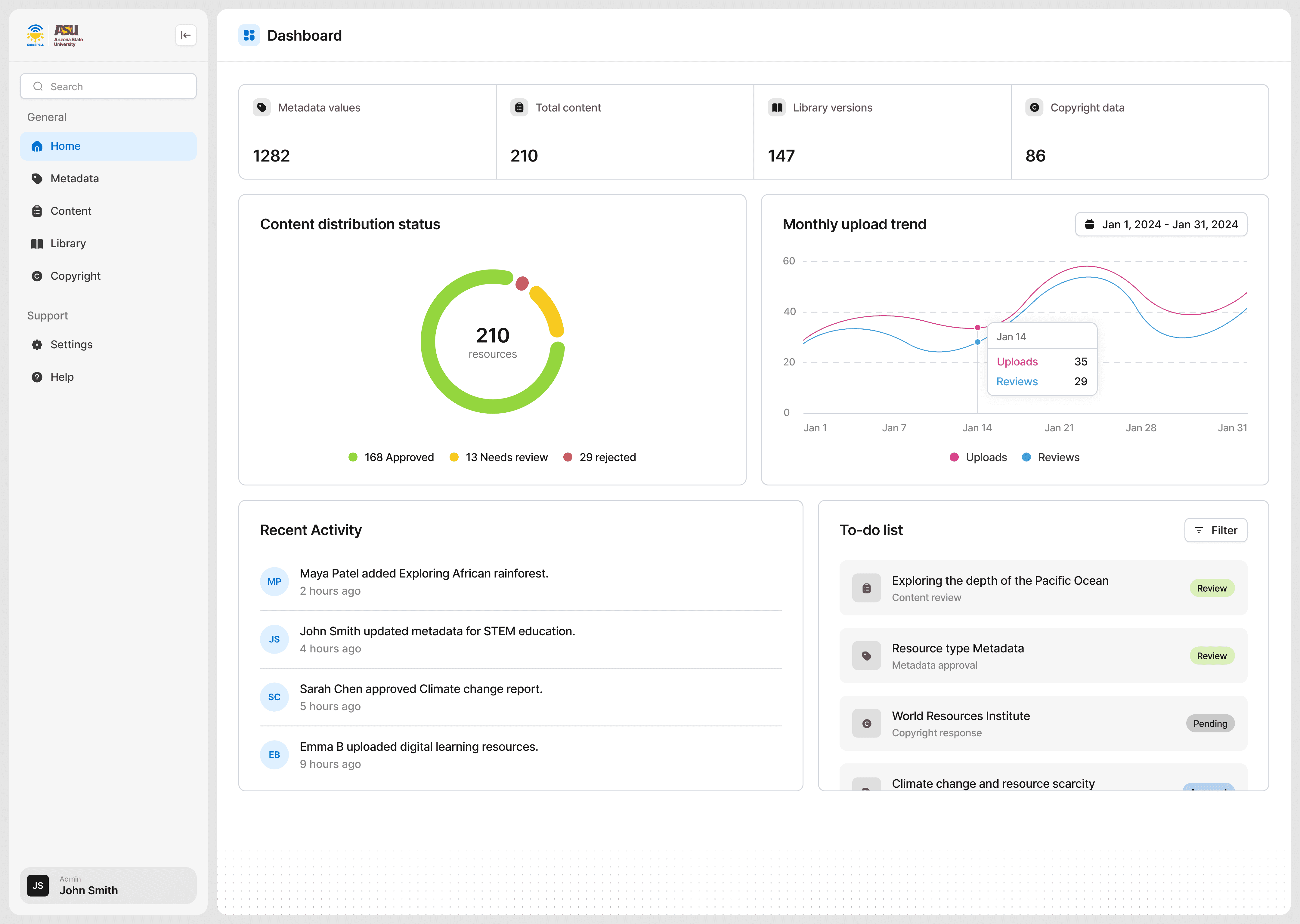
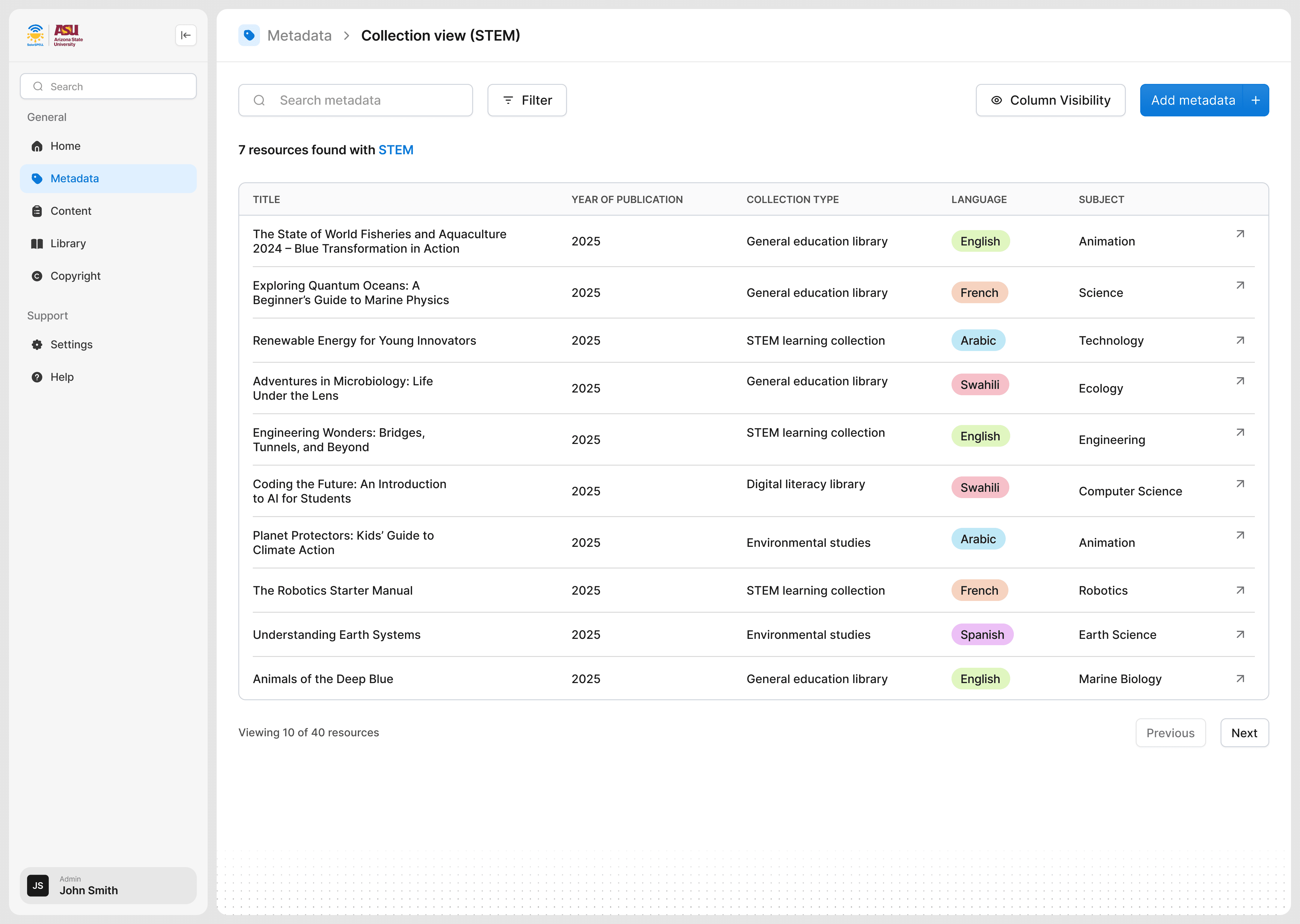
Current process of adding content
TIME SINK
To build a single library, curators manually entered 15+ metadata fields for every asset, often taking weeks per collection.
TRUST BARRIER
Curators were responsible for content accuracy and compliance, but the manual workflow increased errors and led to high-stress review cycles.
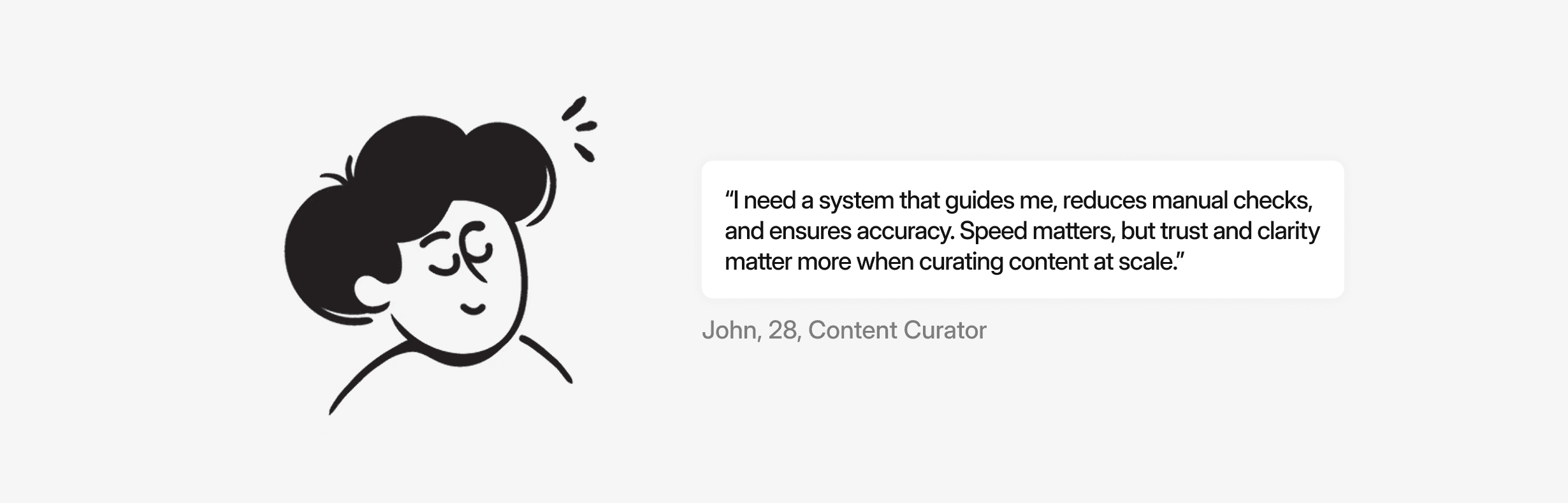
Meet John, our primary user

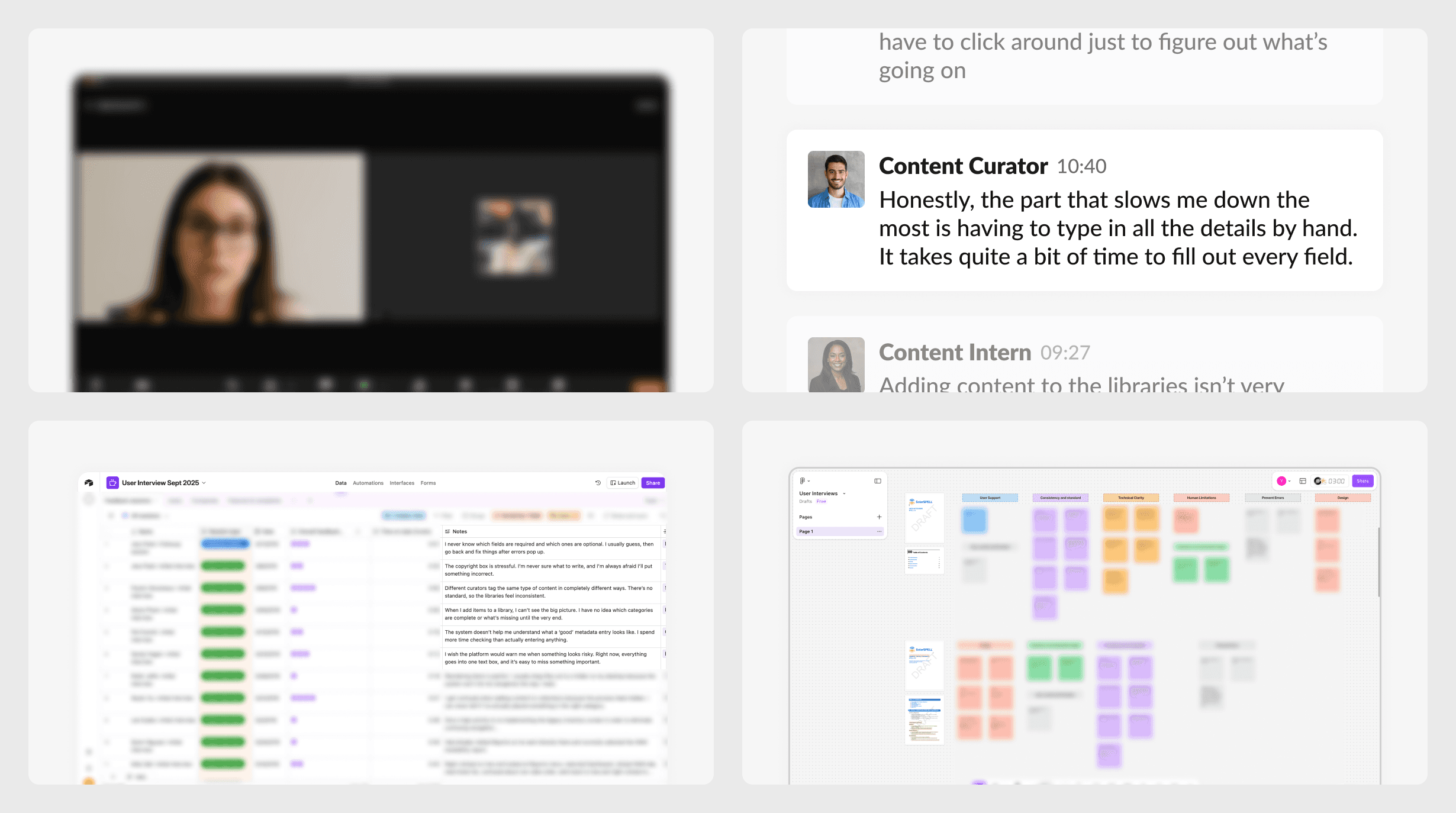
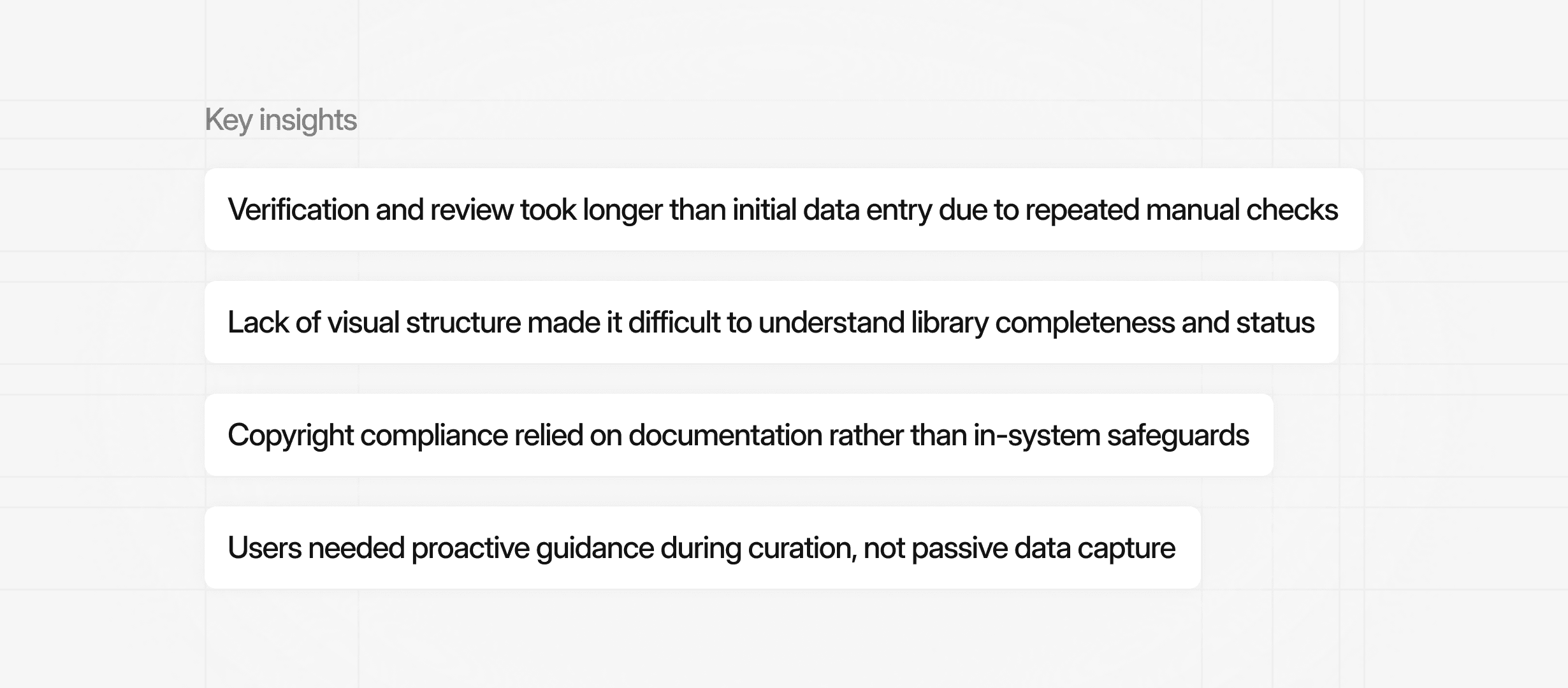
These insights shaped a core design principle:
AI should support decision-making and validation while keeping curators in control.
Assistive AI instead of autonomous AI
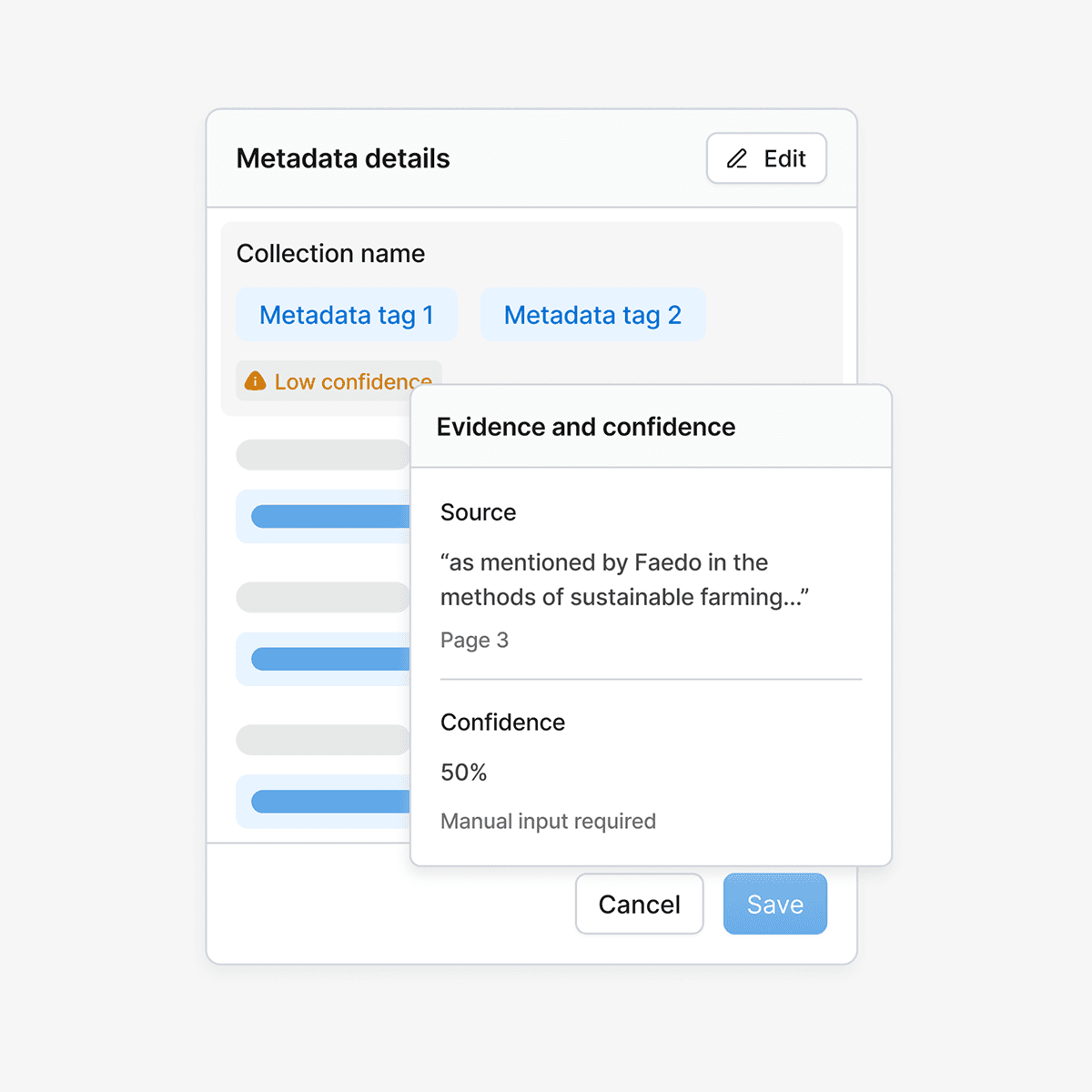
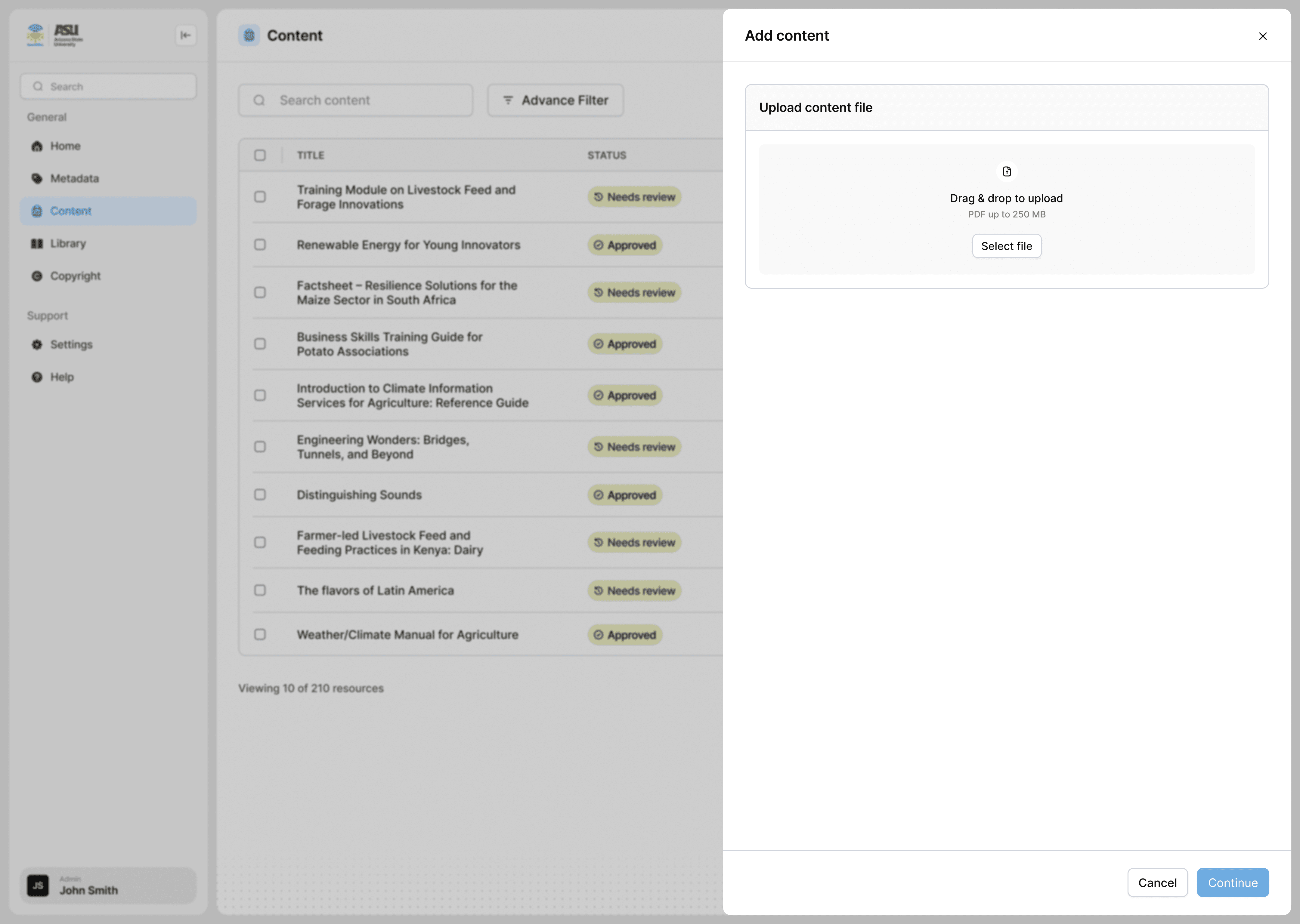
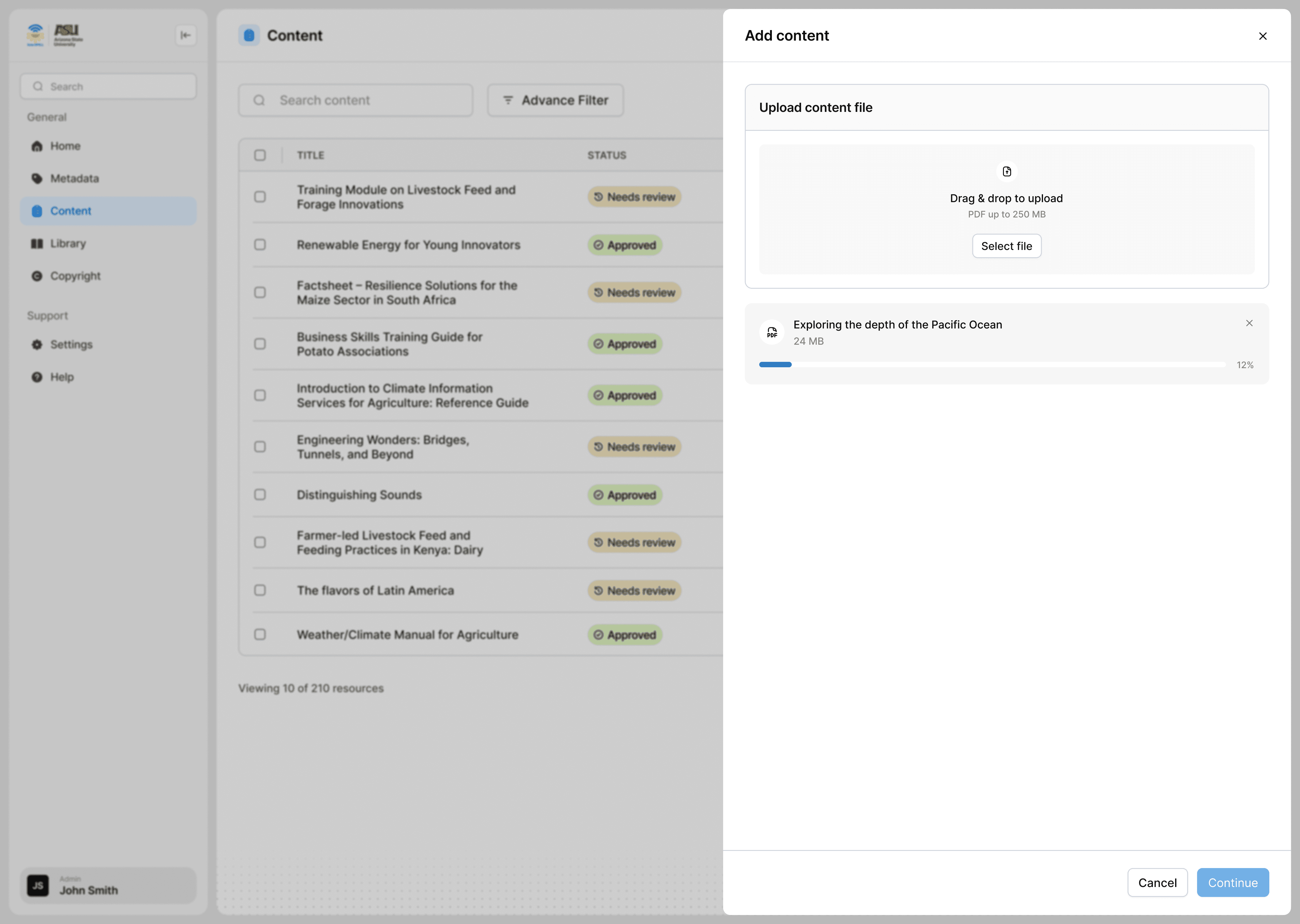
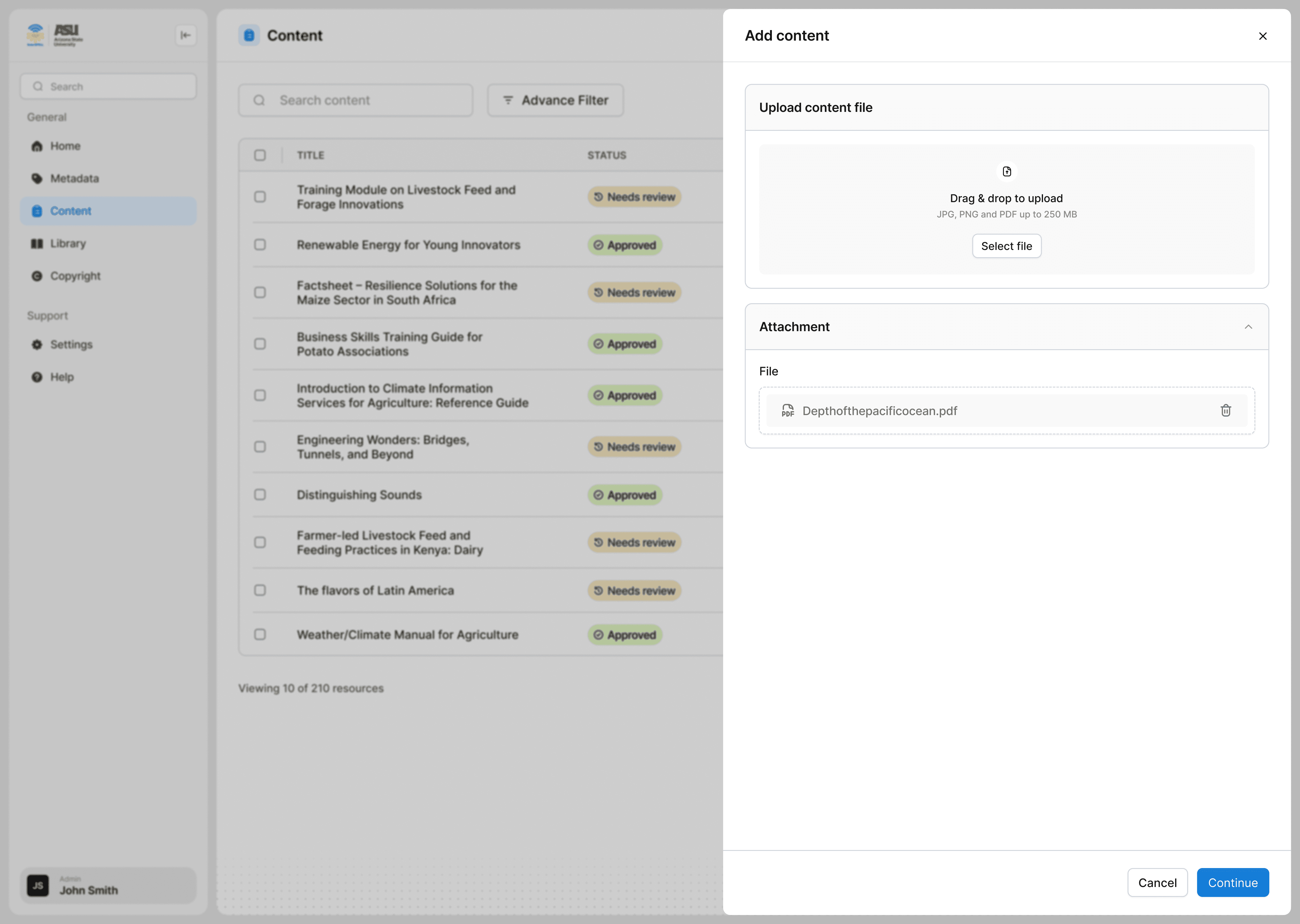
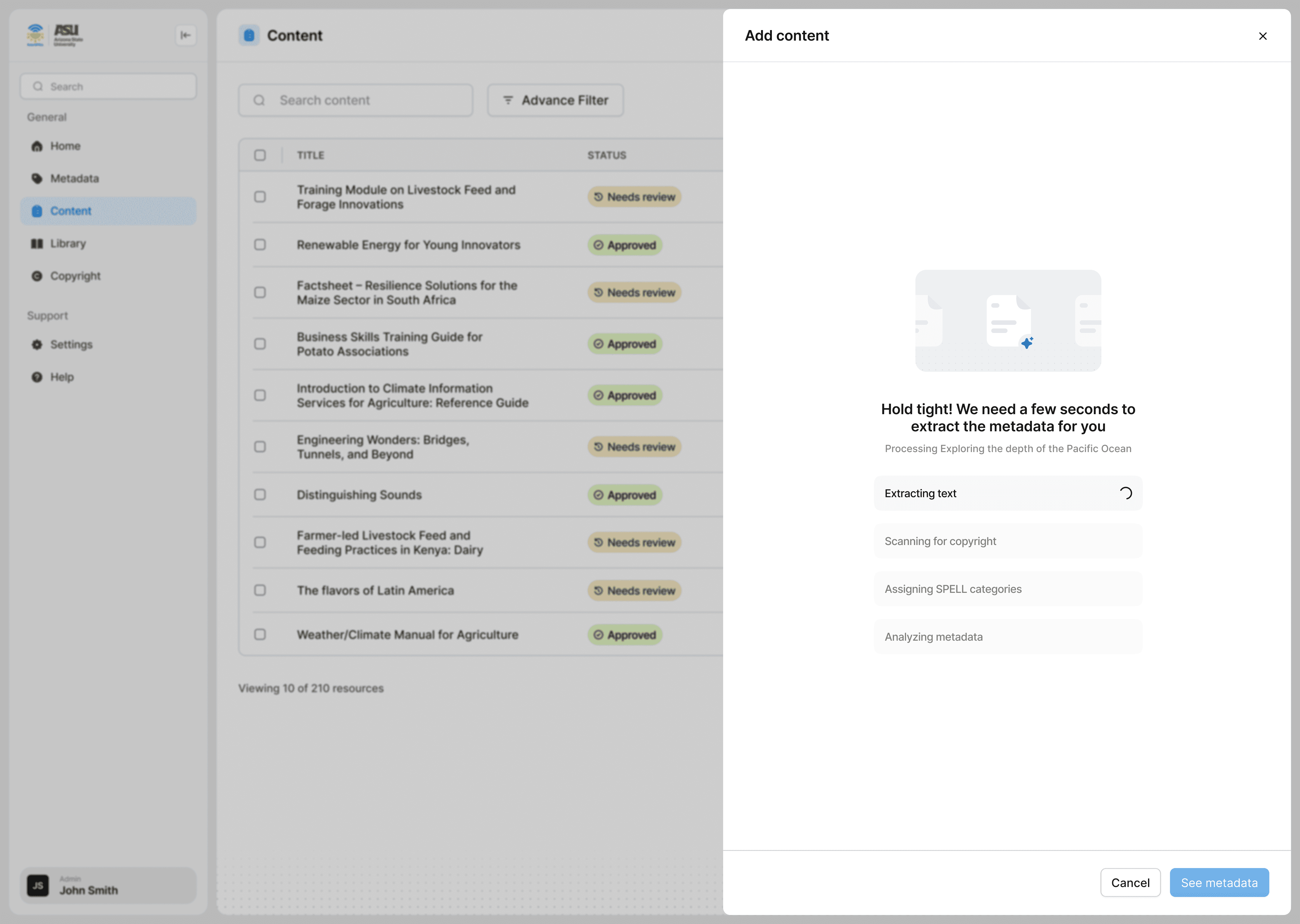
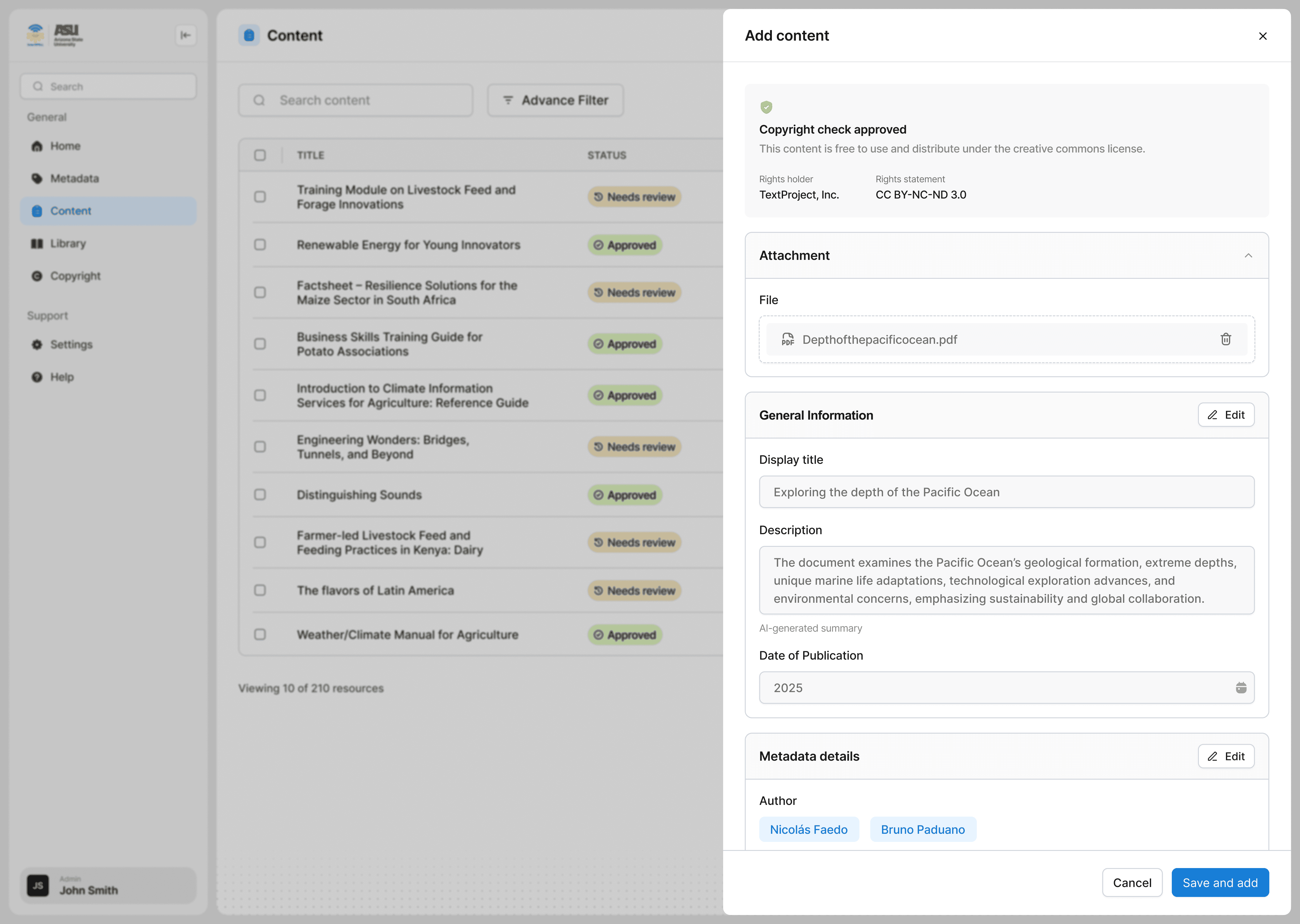
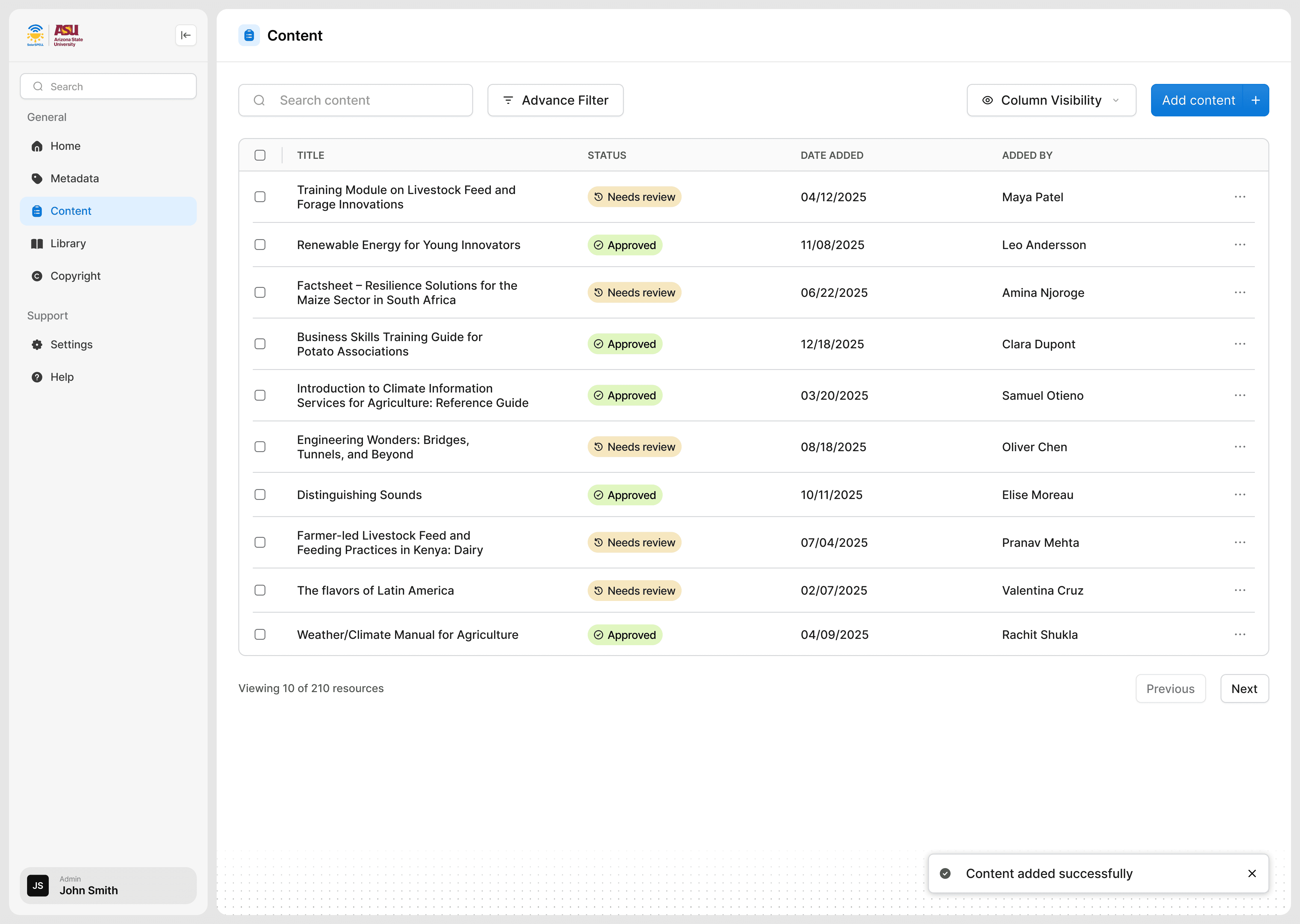
Metadata creation was redesigned as an assistive workflow where AI suggests structured fields while curators retain control over accuracy and approval.
WHY
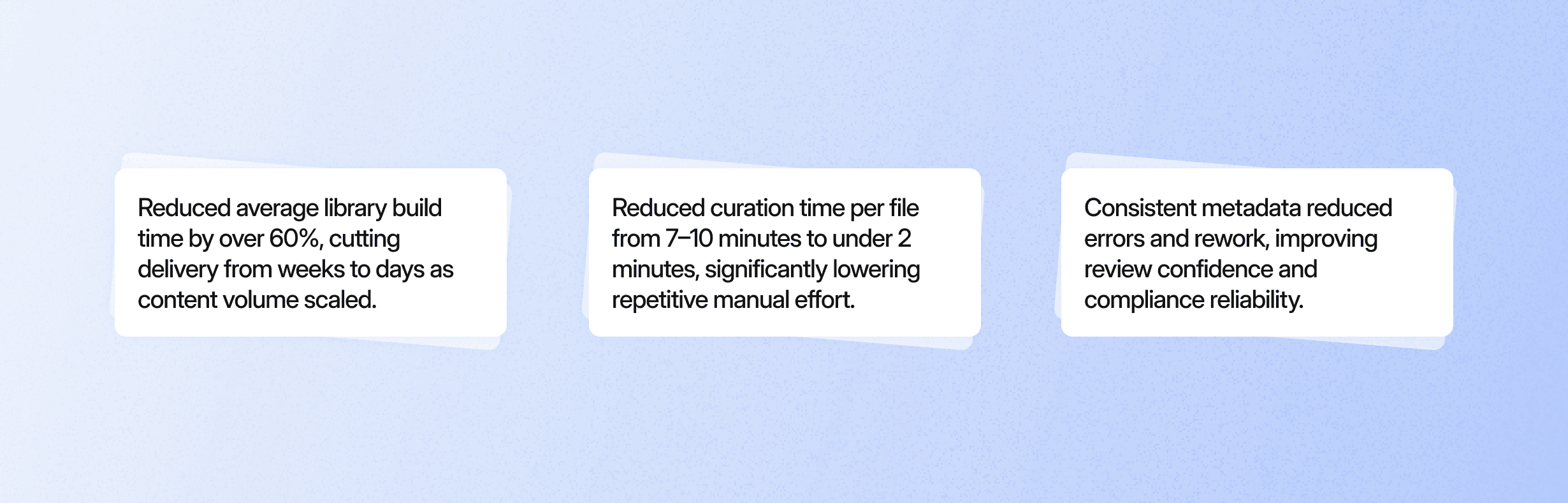
Reduced manual effort without removing curator accountability for accuracy and compliance.
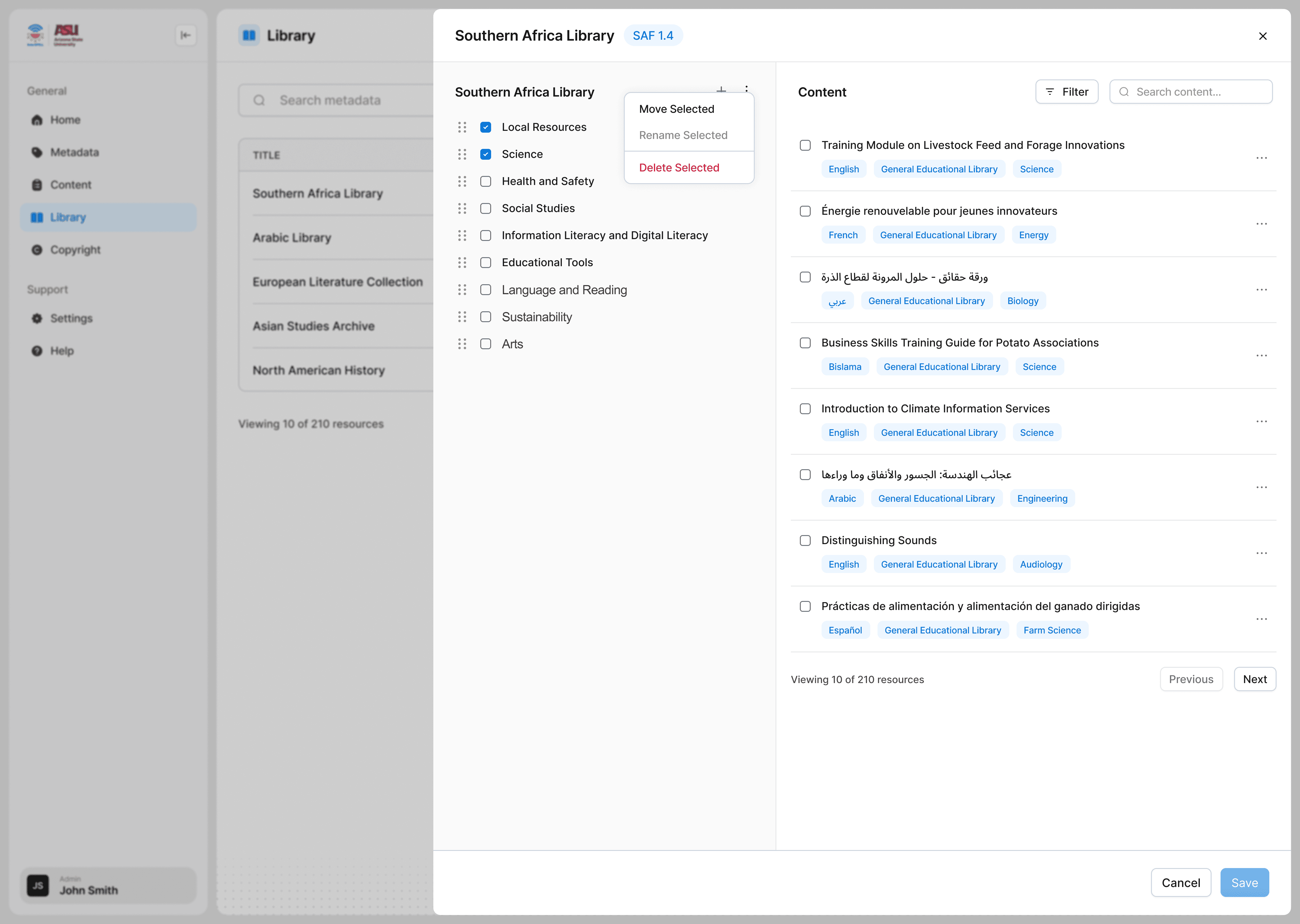
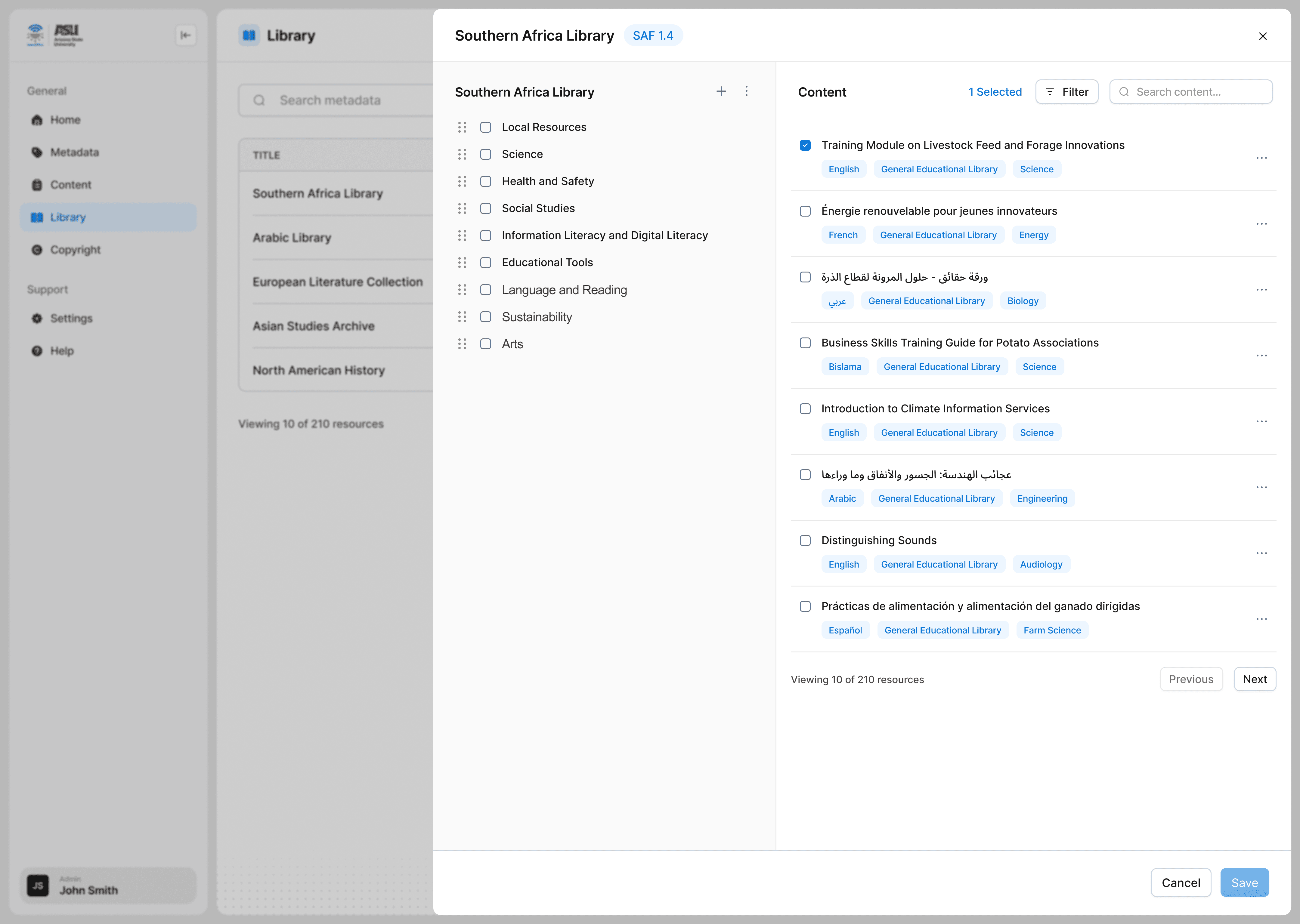
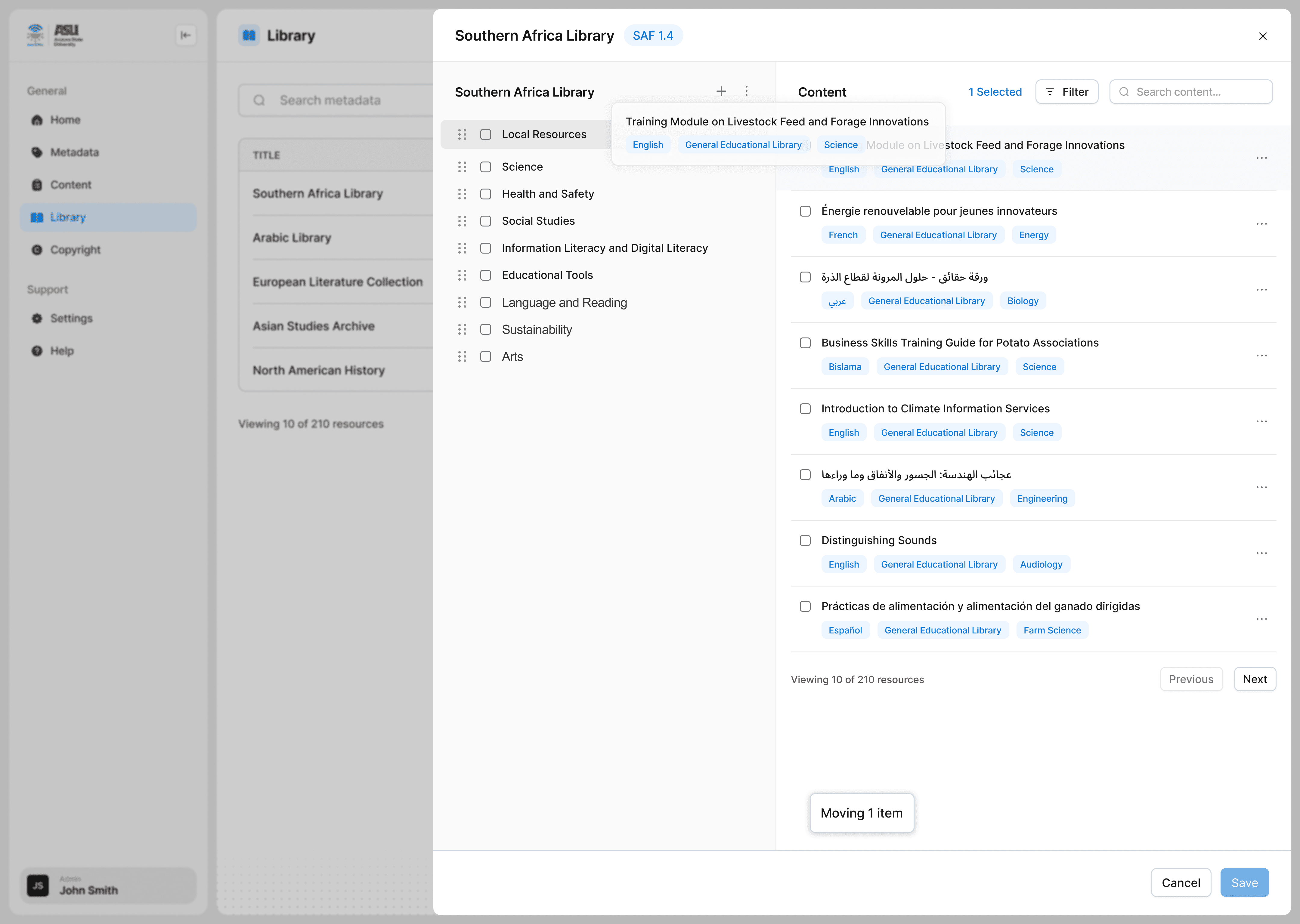
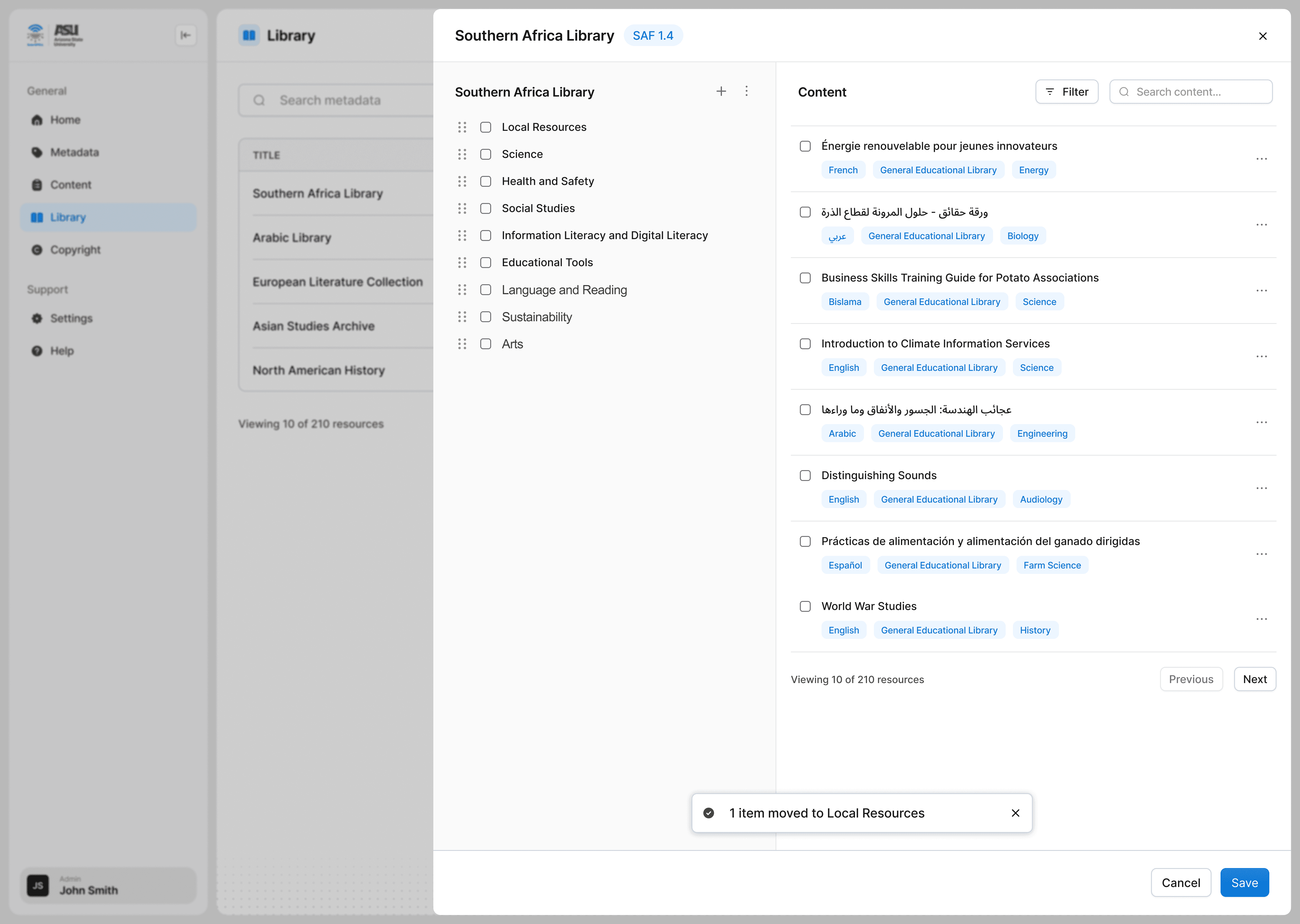
Visual drag-and-drop library builder
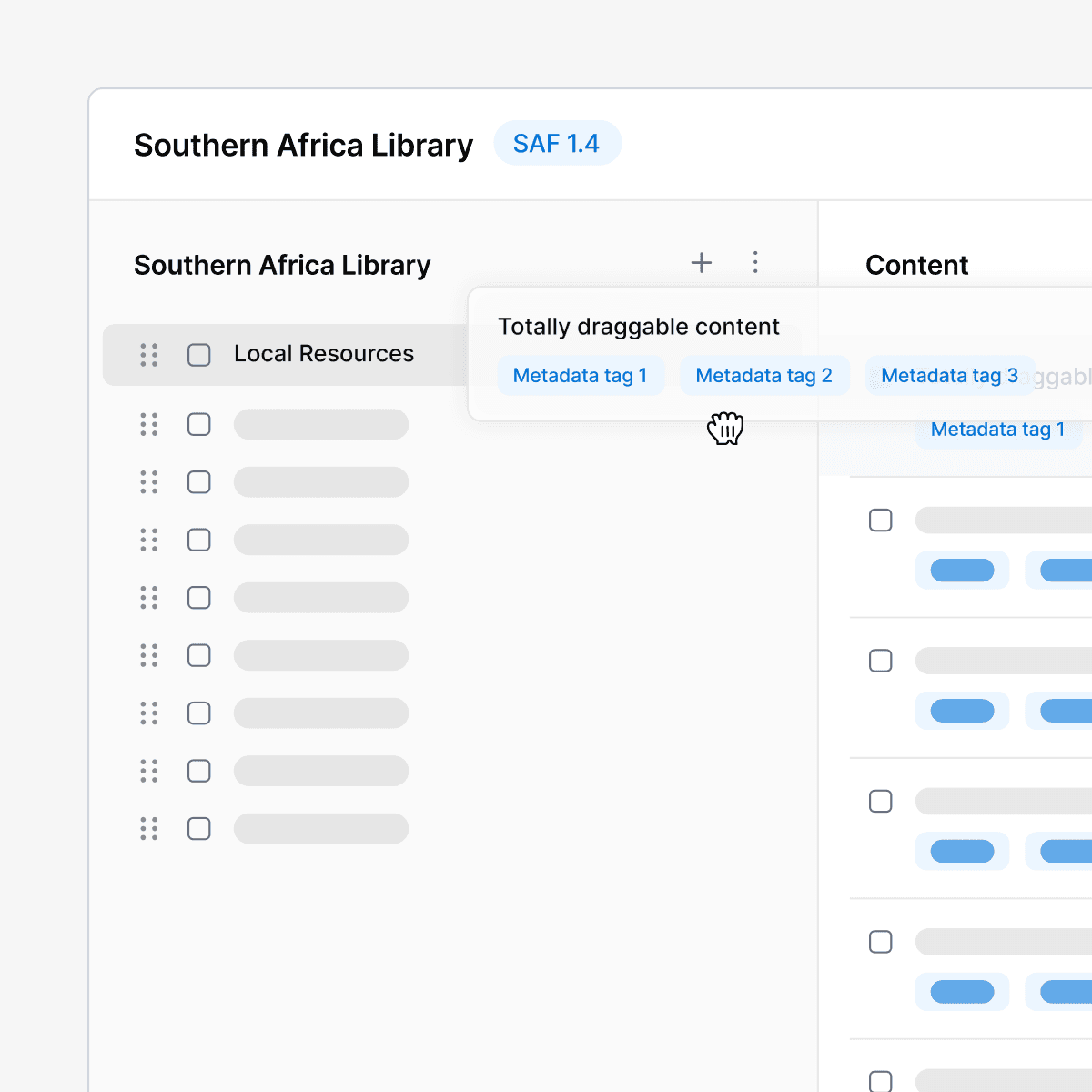
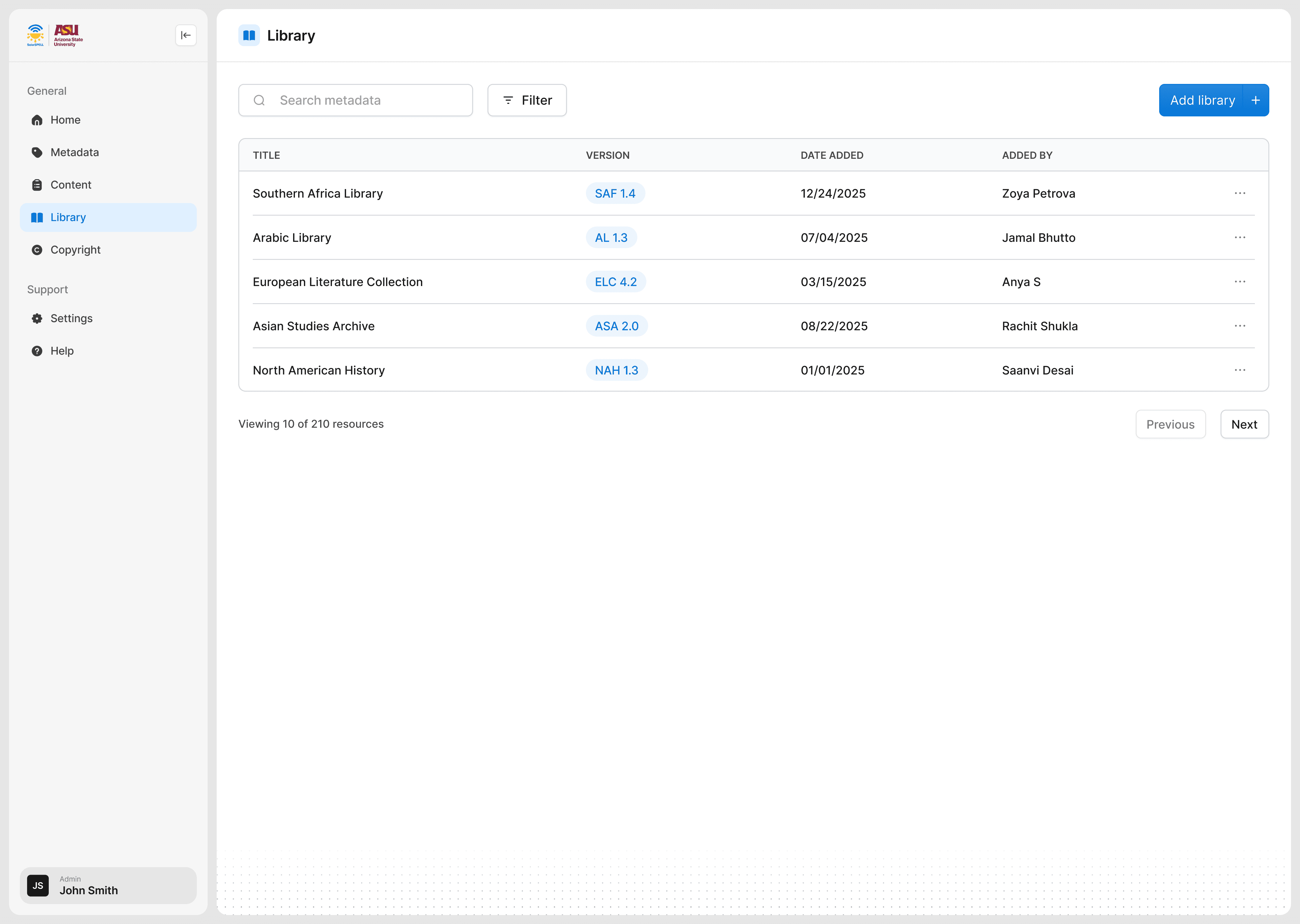
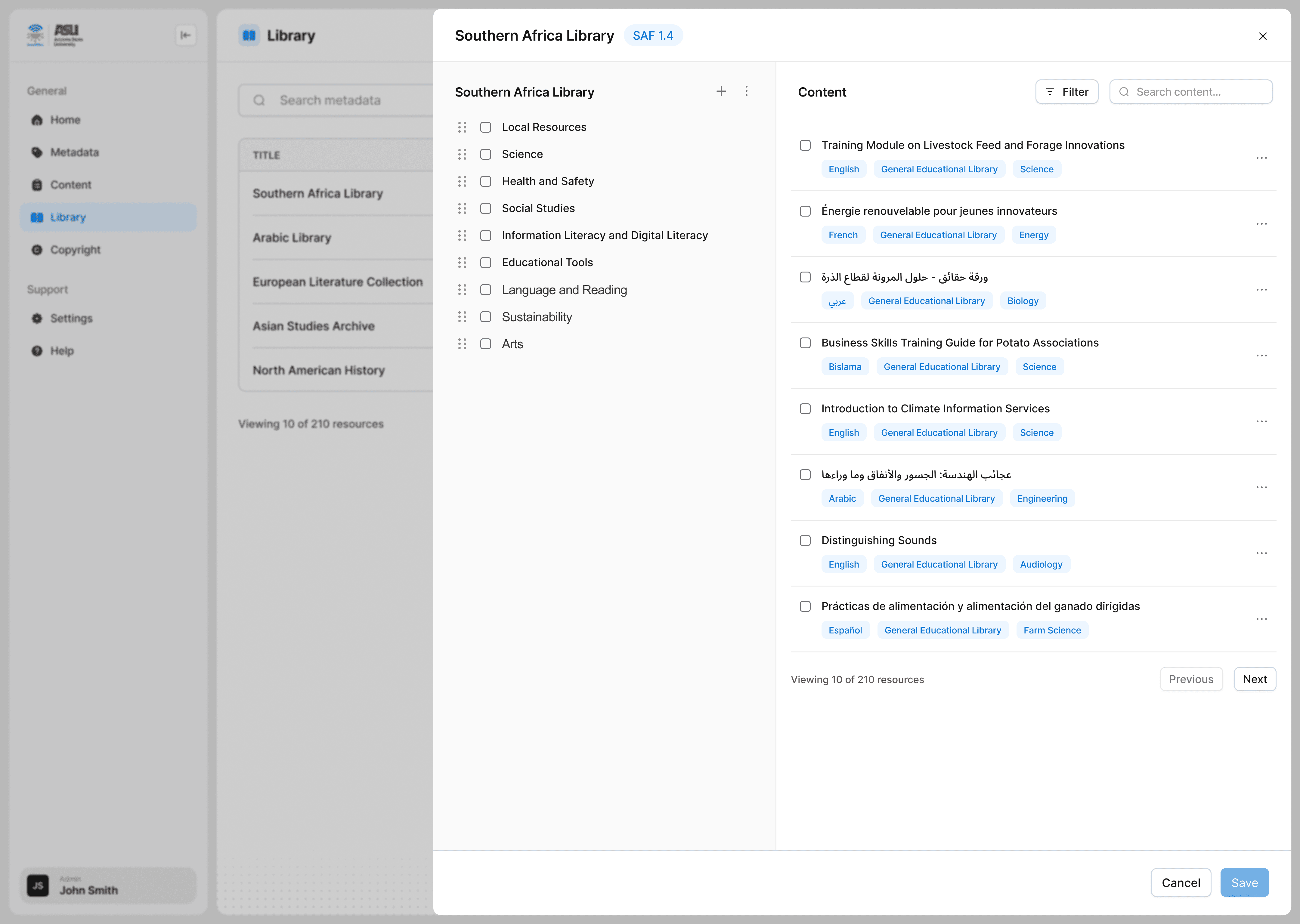
Library creation was redesigned as a visual canvas where curators could directly organize content and see library structure, progress, and completeness in one view.
WHY
Curators needed persistent visibility into structure and gaps to confidently manage libraries at scale.
AI OVER TRUST
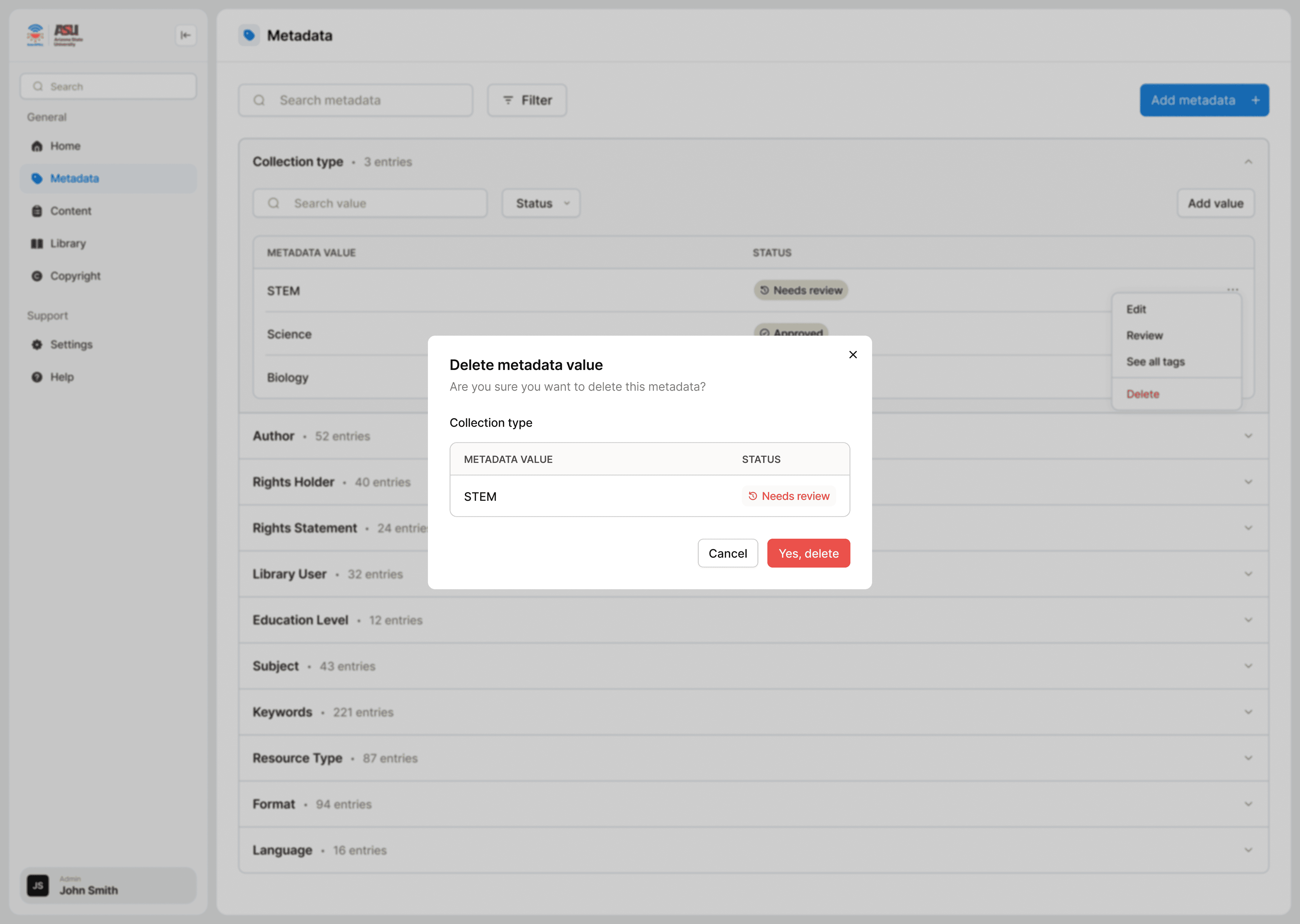
Increased AI assistance risked over-trust, so we intentionally required human approval for all metadata changes.
DRAG-AND-DROP CONSTRAINTS
Visual drag-and-drop interactions improved clarity but required careful constraints to prevent accidental structural changes.
SPEED VS COMPLIANCE
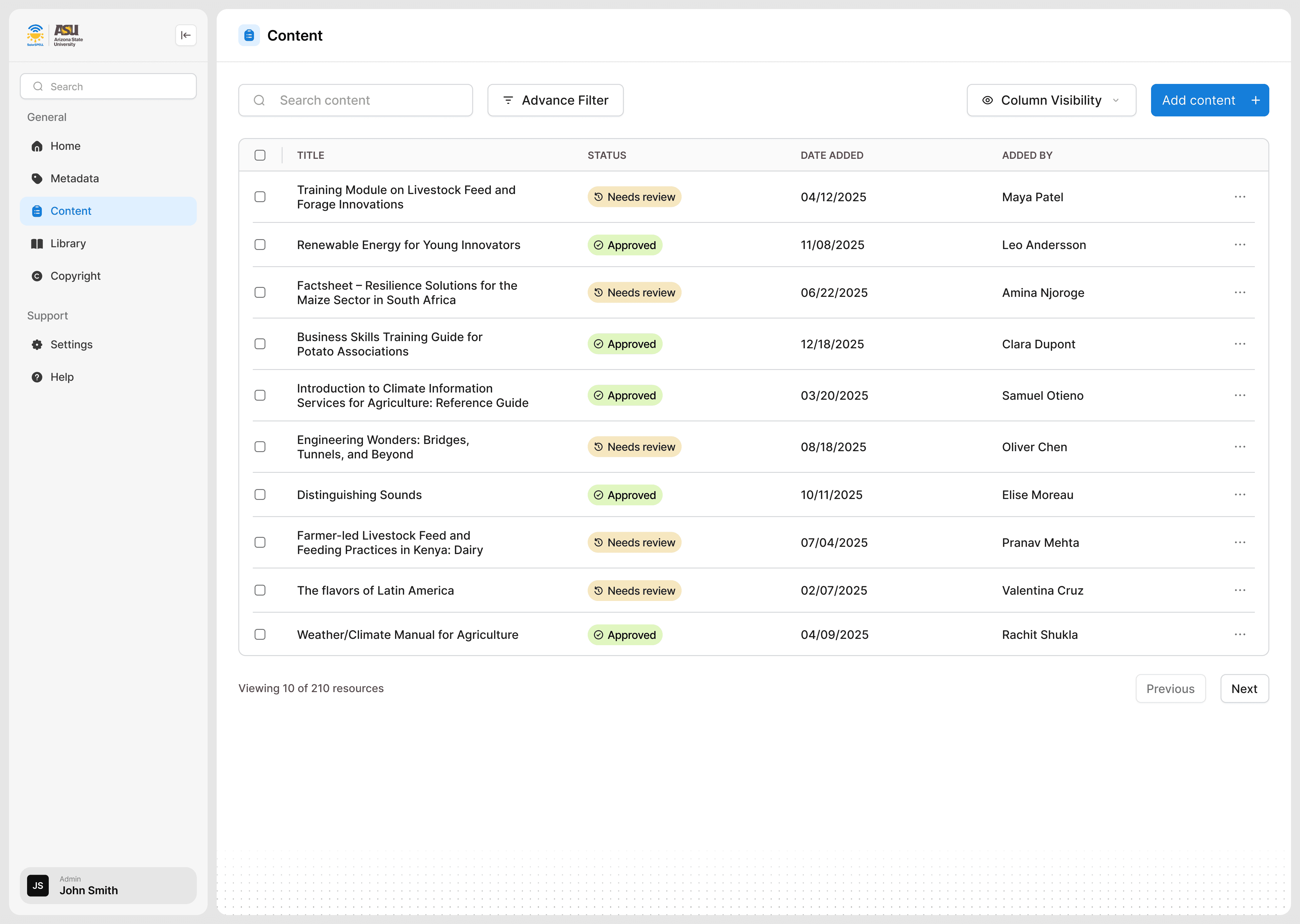
Optimizing for speed risked compliance errors, so validation and review states were treated as first-class design elements.
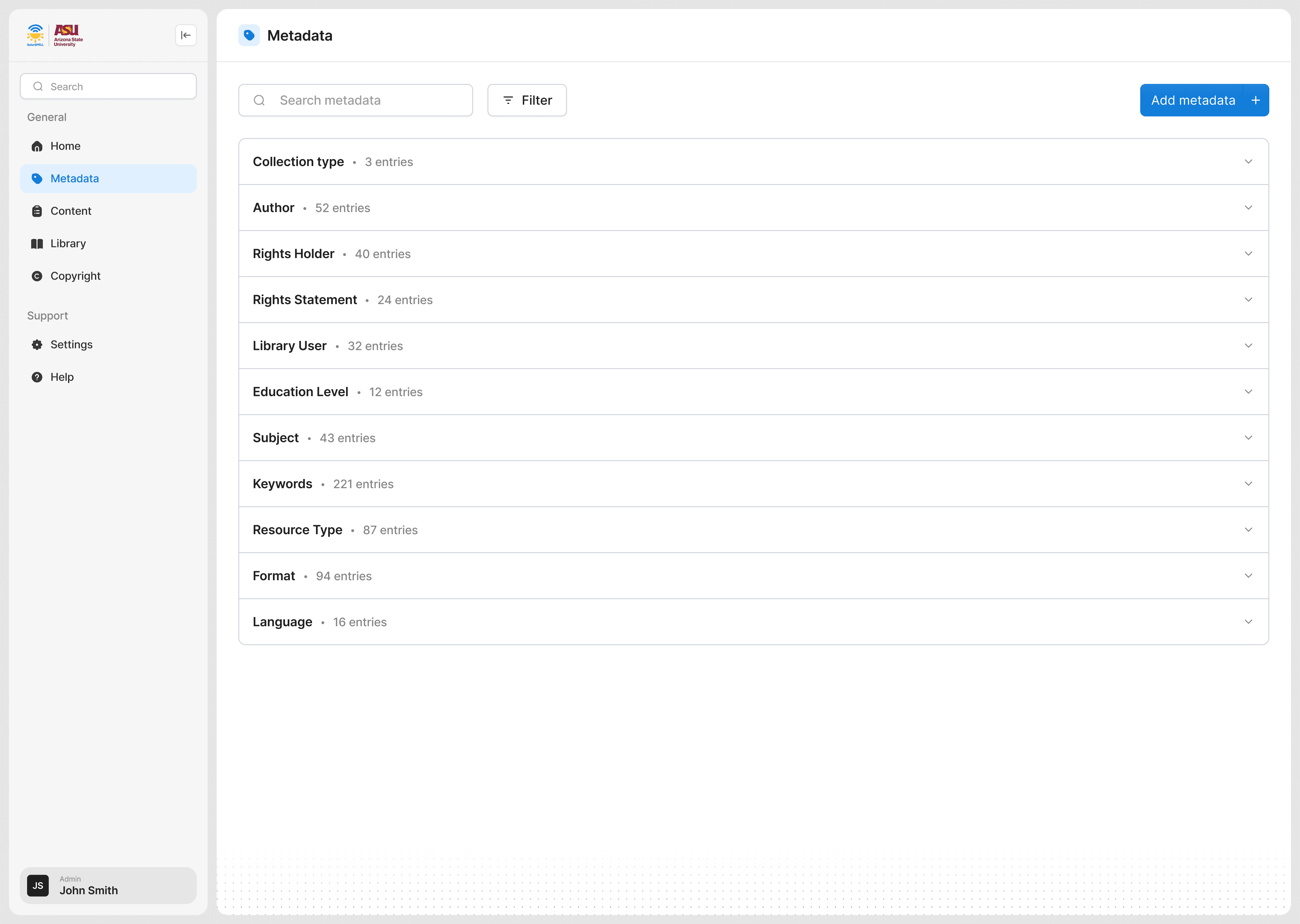
Concept 1: Field-level AI metadata assistance
WHY THIS WAS VIABLE
Preserved curator control and aligned with existing workflows, reducing perceived risk and supporting daily use.
OBSERVED LIMITATIONS
Relied heavily on user initiation, increasing interaction overhead, and limiting efficiency for high-volume curation.
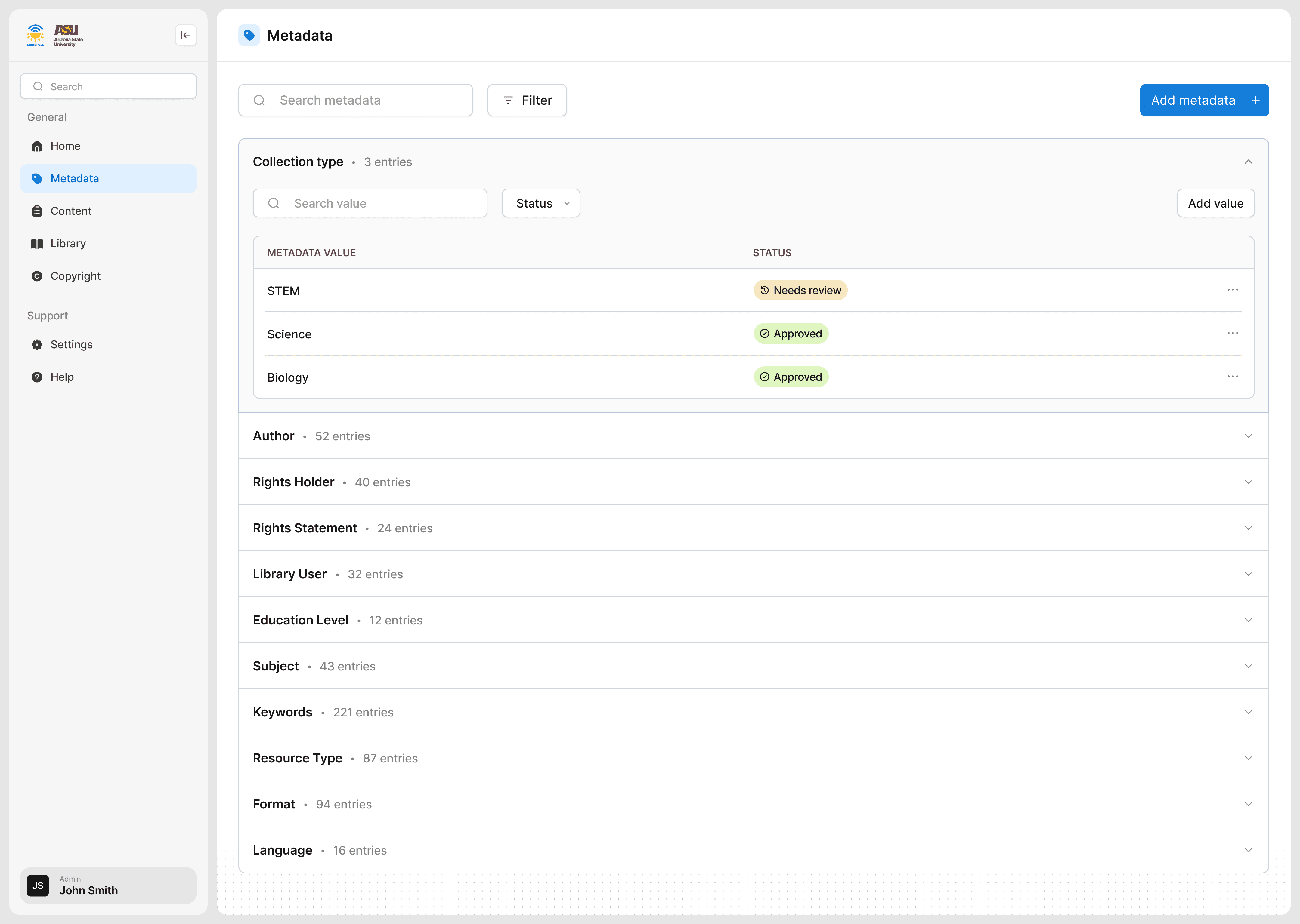
Concept 2: Batch-oriented library management
WHY THIS WAS VIABLE
Minimized accidental structural changes and provided a controlled way to manage content at scale.
OBSERVED LIMITATIONS
Removed content from its broader context, making it harder to reason about library structure holistically.
TRUST MUST BE DESIGNED INTO THE SYSTEM
This project reinforced that AI systems gain adoption only when outputs are transparent, reversible, and explicitly owned by humans.
COLLABORATION SHAPES OUTCOME
Aligning early with engineers and content experts helped surface constraints sooner and avoid costly rework later.